Questions, answered
Missed-Call Recovery FAQs
Learn how VOXFARO helps businesses recover missed calls, respond faster, qualify callers, book more appointments, and reduce revenue leakage.
What is missed-call recovery?
Missed-call recovery is the process of responding to calls that were unanswered, delayed, sent to voicemail, or missed outside business hours.
Why are missed calls costly for businesses?
Missed calls are costly because callers often have immediate intent. They may want an appointment, quote, consultation, service visit, urgent help, or a quick answer. If your business does not respond quickly, the caller may contact a competitor.
Can VOXFARO recover after-hours calls?
Yes. VOXFARO can help capture after-hours demand by answering, collecting caller details, identifying urgency, providing approved information, creating a follow-up task, booking a next step, or routing urgent calls based on your rules.
How quickly should missed calls be followed up?
Missed calls should generally be followed up as quickly as possible because caller intent is highest in the moment. VOXFARO helps reduce that delay with an always-on response layer.
Is every missed call recoverable?
No. Some callers may have chosen another provider, called by mistake, or lost interest. VOXFARO focuses on the calls most likely to create value: real prospects, appointment requests, service inquiries, customer needs, and high-intent callers.
How does VOXFARO estimate missed-call revenue?
VOXFARO estimates missed-call revenue by looking at call volume, missed-call rate, average customer or appointment value, close rate, recoverable call percentage, booking rate, and staff time saved.
Can missed-call recovery connect with CRM or SMS workflows?
Yes. VOXFARO can connect missed-call recovery with CRM updates, staff notifications, call summaries, SMS follow-up, email follow-up, booking requests, and lead status changes where appropriate.
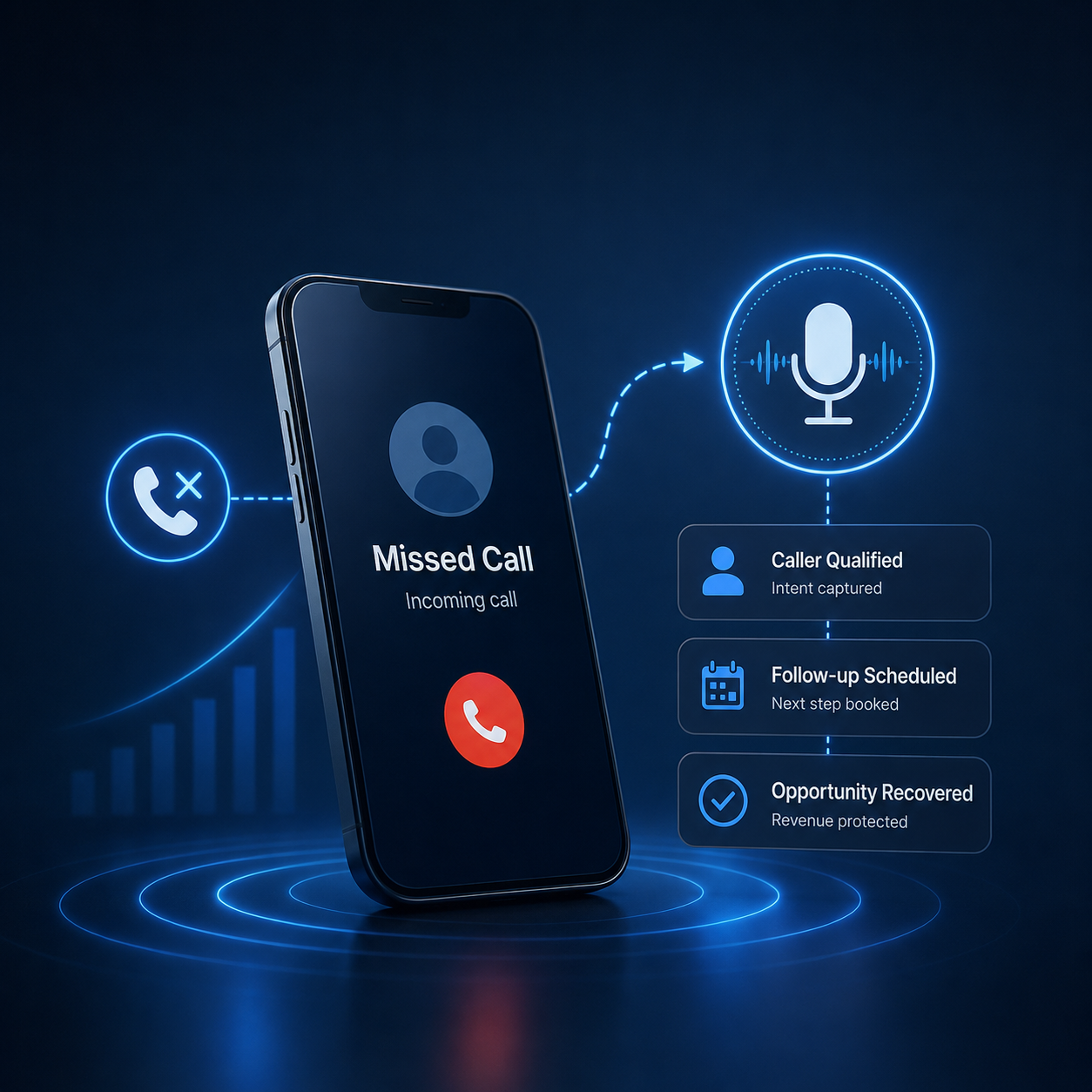
What happens after VOXFARO recovers a missed call?
VOXFARO can summarize the caller’s need, qualification answers, urgency, contact details, and recommended next step. The caller may be booked, transferred, routed to staff, or added to your follow-up process.