
Find where profitable demand disappears between the first call and the completed job.
A practical framework for auditing call capture, response, qualification, booking, estimates, reactivation, retention, and attribution.
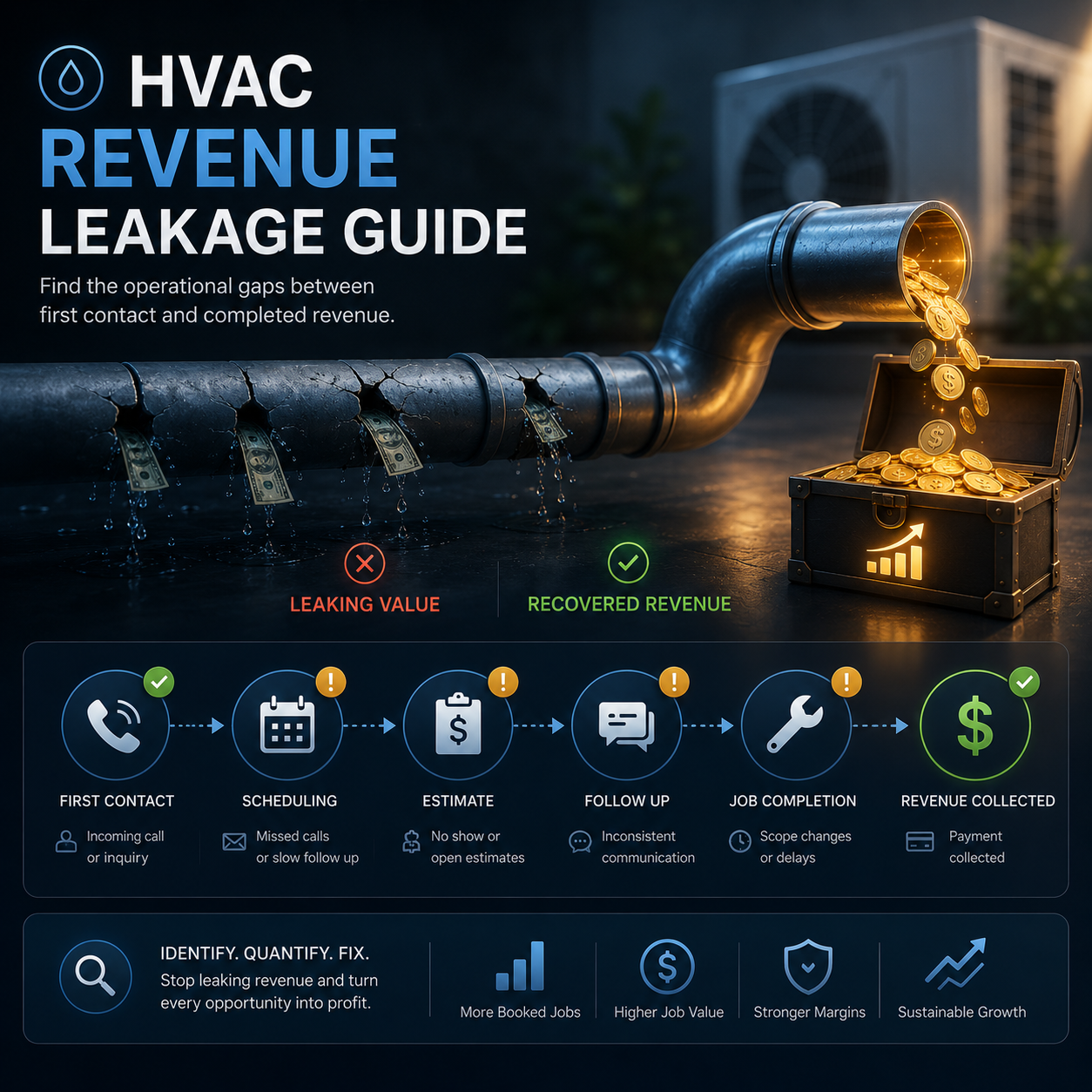
Start with the journey, not the software.
Revenue leakage is the difference between the opportunity entering your business and the value the operation successfully completes. The leak can occur before contact, during intake, at booking, after an estimate, following a cancellation, or when past customers receive no relevant next step.
1. Capture leakage
Review unanswered calls, abandons, hold time, voicemail, overflow, after-hours demand, web inquiries, and lead-source response. Separate raw activity from meaningful contact.
2. Conversion leakage
Examine whether intake consistently captures service need, urgency, location, property status, equipment context, timing, and the appropriate appointment or human handoff.
3. Recovery leakage
Identify open estimates, no-shows, cancellations, unbooked inquiries, unsold replacement leads, and incomplete follow-up tasks. Measure both count and potential value.
4. Retention leakage
Review maintenance-plan opportunities, seasonal reminders, eligible lapsed customers, review requests, repeat service, and service-recovery ownership.
5. Attribution leakage
Map the identifiers needed to connect a source and conversation to an appointment, estimate, completed job, revenue amount, and customer record.
Choose the first workflow
Prioritize the leak with meaningful volume, material value, controllable process, available data, enough capacity, and an accountable owner. A measurable narrow pilot is more valuable than a broad automation launch.